
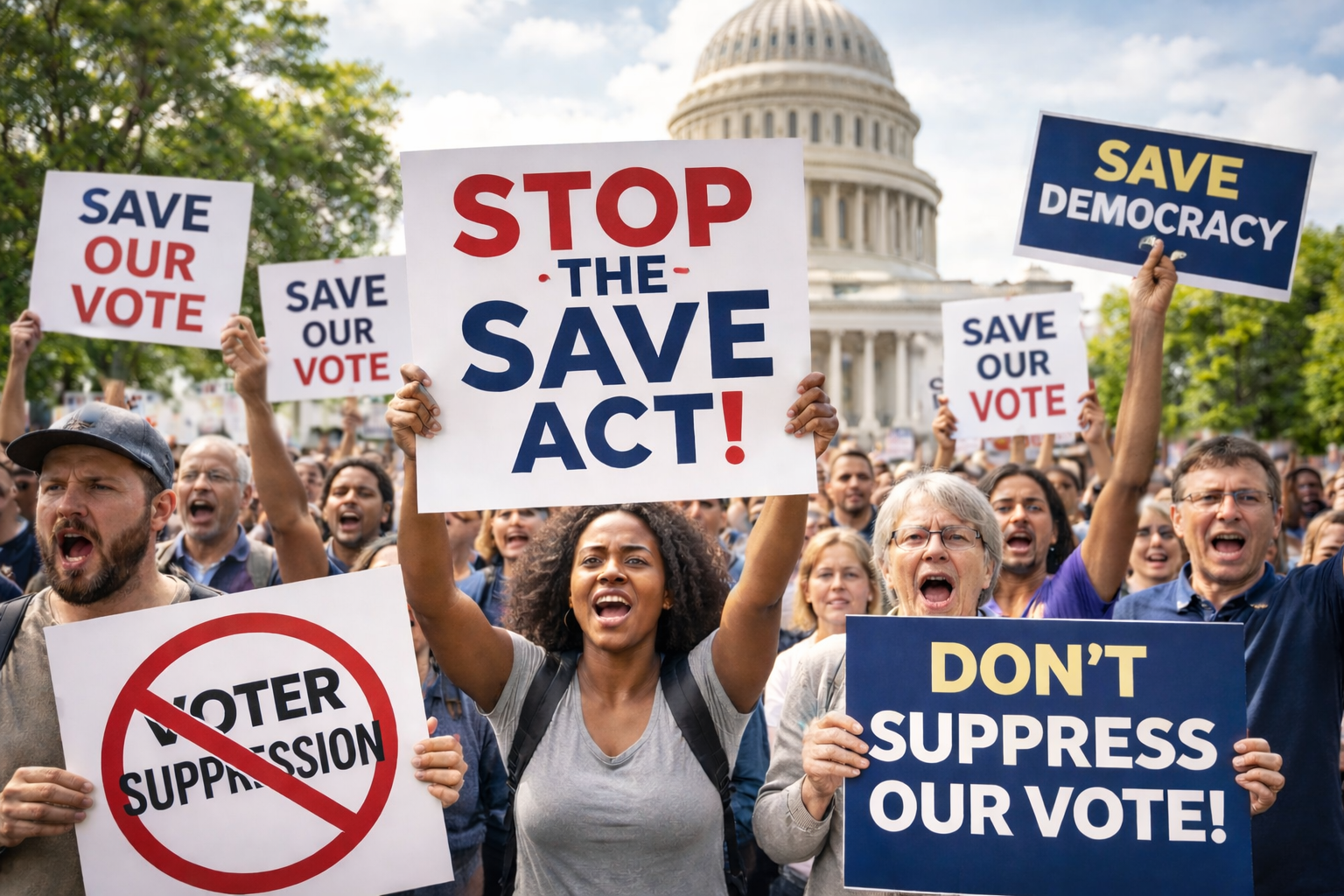
Republicans in Washington have a remarkable ability to legislate solutions to problems that don’t exist. The latest example is the Safeguard American Voter Eligibility Act (SAVE Act).
While thousands of “essential” federal workers are being forced to work without pay during yet another partial government shutdown, under the watch of the self-proclaimed “great negotiator,” Congress is spending its time trying to fix something that isn’t broken: widespread voter fraud.
Supporters claim the bill is necessary to protect election integrity. The problem with that argument is straightforward: after one of the most scrutinized elections in American history, there is no evidence of widespread voter fraud.
The Most Investigated Election in Modern History
Following the 2020 election, allies of Donald Trump filed more than 60 lawsuits challenging results across the country. Courts reviewed the claims and dismissed the overwhelming majority for a simple reason: there was no evidence.
Even the Justice Department under Trump’s own attorney general, William Barr, found no fraud that would have changed the outcome of the election.
Federal cybersecurity experts were even more direct. The Cybersecurity and Infrastructure Security Agency concluded that the 2020 election was “the most secure in American history.”
So much for the narrative that “the system” was riddled with fraud.
Recounts, Audits, and More Recounts
The states most frequently cited in election conspiracy theories conducted some of the most exhaustive reviews.
In Georgia, officials conducted a full hand recount of roughly five million ballots. The numbers matched.
In Arizona, a partisan audit ordered by the state Senate in Maricopa County — hardly a friendly venue for Democrats — ultimately confirmed Joe Biden’s victory margin.
In Wisconsin, recounts in two counties again confirmed the results with only minor adjustments.
Investigations in Michigan and Pennsylvania likewise uncovered isolated administrative issues but no systemic fraud.
In other words, the election system was stress-tested from every angle, and it held.
Enter the SAVE Act
Despite all of this, Republicans in Congress are now considering legislation that would require Americans to present documentary proof of citizenship — such as a passport or birth certificate…when registering to vote in federal elections.
On paper, it sounds simple. In practice, it would create unnecessary hurdles for millions of eligible voters.
Many Americans don’t have a passport. Others will struggle to obtain or replace a birth certificate, particularly if they’ve moved, lost records, or changed their name. For seniors, rural residents, low-income Americans, and married women whose documentation may not match their current name, the process could quickly become a bureaucratic obstacle course.
All of this to address a problem that has been investigated, litigated, audited, recounted, and repeatedly debunked.
If It Ain’t Broken…
The irony of the SAVE Act is that it risks undermining confidence in elections by implying there is a massive fraud problem that somehow escaped the attention of courts, federal investigators, state officials, and cybersecurity experts.
They looked. Thoroughly. They found nothing.
Protecting elections matters. But making it harder for eligible Americans to vote in order to combat an imaginary threat doesn’t strengthen democracy…it weakens it.
Before Congress rushes to “fix” the system, it should remember the conclusion reached by nearly every serious investigation after 2020:
The system worked just fine.


 Repartee Room
Leave a comment